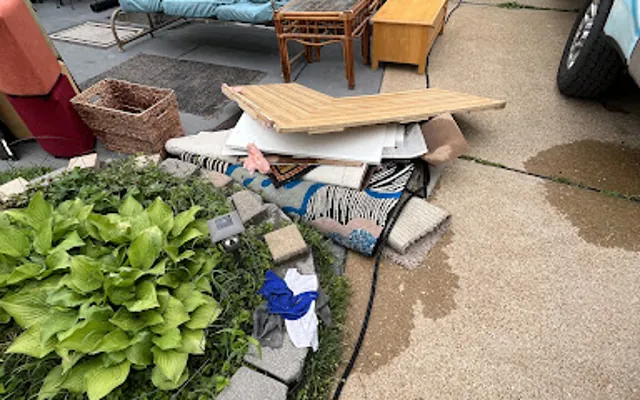
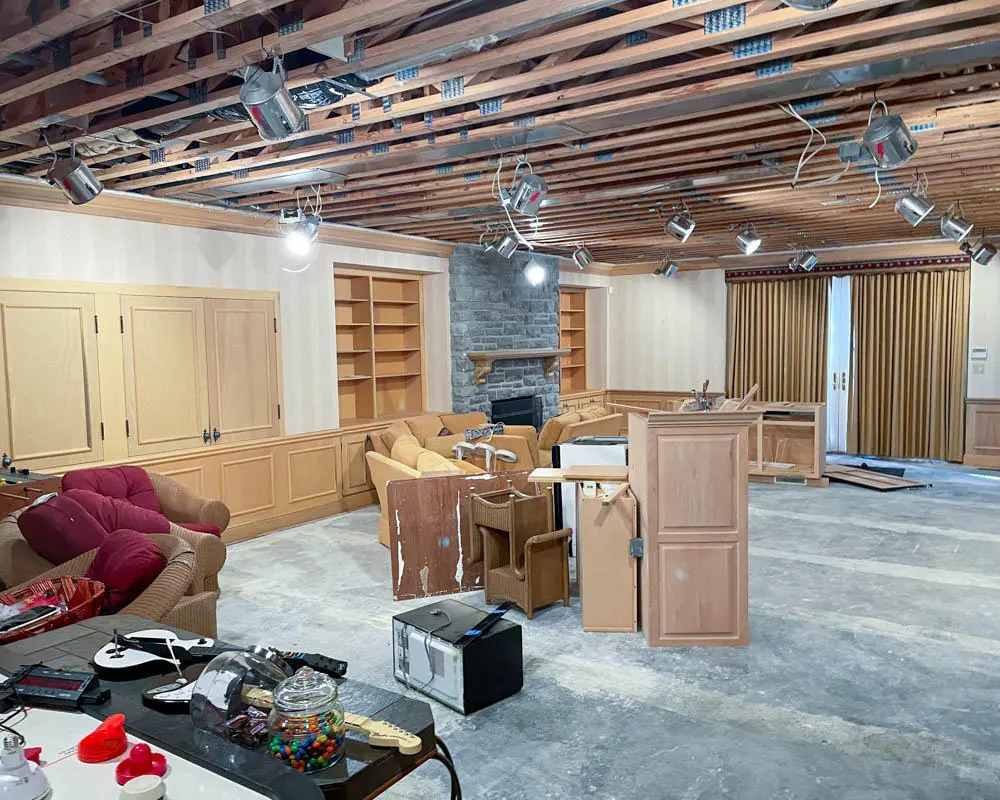
A broken water main or service line floods a yard, a crawlspace, or a home under constant pressure until it is shut off. Crews across Cary extract the water and dry the structure, on site in about an hour.

Crews confirm the supply is off at the meter or by the utility, then map where the water traveled into the crawlspace, slab, or living space with meters.
Submersible pumps clear flooded crawlspaces and low points, and extractors pull standing water from floors and any finished rooms it reached.
Soaked insulation and unsalvageable materials are removed, and air movers and dehumidifiers dry the framing, subfloor, and walls to a verified target.
Readings confirm the structure is dry before repair, and the source and drying are documented for the insurance claim.

While help is on the way, these first steps, done only where it is safe, limit the damage and protect the insurance claim.
Shut the supply off at the source, or close the home's main valve if the source is not obvious. Stopping the flow limits the damage more than anything else.
Switch off electricity to the affected area, but only if the breaker can be reached without standing in or touching the water.
Get a crew dispatched right away. The sooner extraction and drying begin, the more flooring, drywall, and belongings can be saved.
Take photos and a short video of the water and the affected rooms before anything is moved, so the insurance claim starts strong.
Water main break cleanup in Cary typically runs from about $1,500 to $6,500, depending on how much water entered, whether it flooded a crawlspace or finished rooms, and how much material has to be removed and dried. A yard-side break caught early sits low, while a break that pushed water into the home sits higher. Coverage depends on the policy and where the break occurred, and crews document the source and drying.
Crews reach Cary and Wake County fast, from Downtown Cary, Method, and West Raleigh to nearby Apex, Morrisville, Holly Springs, Garner, and Fuquay-Varina. See the full list on the areas served across Cary page.
See all areas servedEvery loss is photographed, measured, and logged from the first visit, so the paperwork holds up with your insurance carrier.
Technicians follow recognized IICRC drying standards and prove the work with daily moisture readings, not guesswork.
Emergency dispatch any hour of the day or night, with a real crew on the way, not a callback in the morning.
A real crew dispatched any hour, not a callback in the morning.
Trained technicians following recognized IICRC drying standards.
Truck-mounted, portable, and submersible for any size loss.
The loss is documented and billed to the carrier directly.
A supply line failure is a small hose inside the home behind a fixture or appliance, while a water main or service line break is the larger pressurized line that brings water to the property from the street. A main break tends to move much more water and often floods yards, crawlspaces, and foundations.
For a private service line, the water can often be shut at the property's meter valve. For a public main in the street, the utility shuts it down. Crews confirm the supply is actually off before working, since the line keeps flowing under pressure until it is.
It often surfaces in the yard first, then follows the pipe trench toward the house and seeps into the crawlspace, under the slab, or through the foundation. That is why a break outside can still flood the structure and needs extraction and drying inside.
It depends on where the break is and the policy. Damage inside the home from water that entered is commonly addressed, while the cost to repair a private service line varies by policy. Crews document the source and the drying so the water-damage claim is well supported.
Cary crews are on call 24 hours a day, local and fast, and can be on the way within the hour.
Call (984) 331-5759