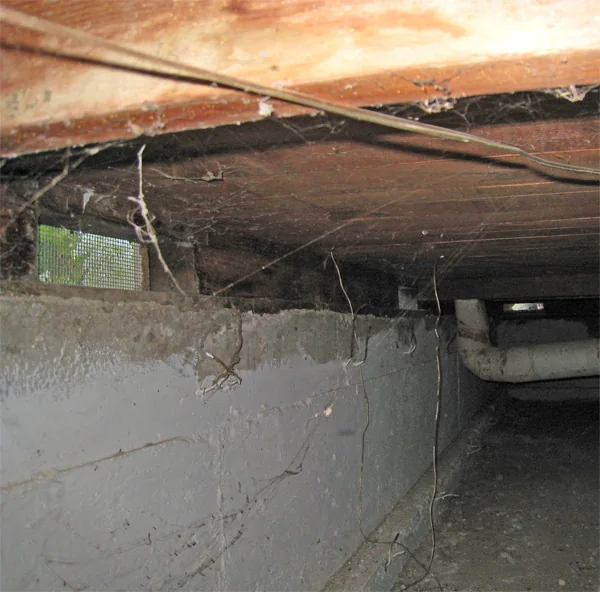
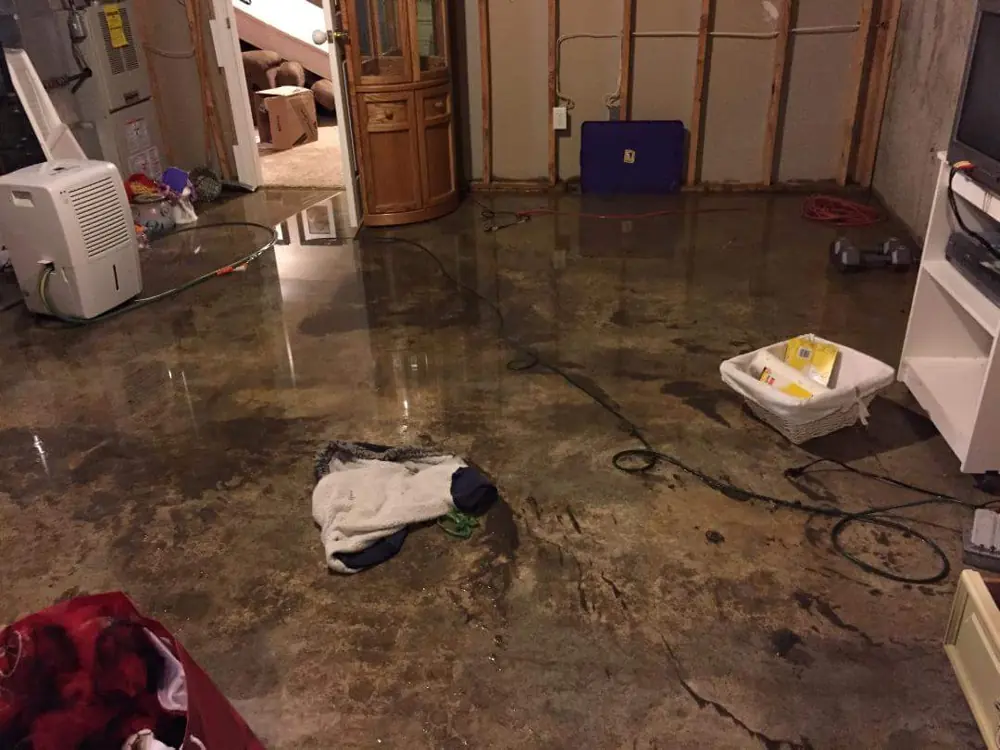
Crawlspaces are the norm under many Cary homes, and they collect water where you never see it. Crews pump the standing water, pull soaked insulation, and dry the joists and subfloor, on site in about an hour.

Portable and submersible pumps clear standing water from the crawlspace floor, and low-clearance extractors reach the tight spots pumps cannot.
Soaked, sagging insulation and any ruined vapor barrier are removed and bagged so they are not left to hold moisture against the framing.
Air movers and dehumidifiers are staged in the crawlspace to dry the joists, band boards, and subfloor to an IICRC-standard target.
Moisture readings confirm the wood is dry before equipment comes out, and the work is documented for the insurance claim.

While help is on the way, these first steps, done only where it is safe, limit the damage and protect the insurance claim.
Shut the supply off at the source, or close the home's main valve if the source is not obvious. Stopping the flow limits the damage more than anything else.
Switch off electricity to the affected area, but only if the breaker can be reached without standing in or touching the water.
Get a crew dispatched right away. The sooner extraction and drying begin, the more flooring, drywall, and belongings can be saved.
Take photos and a short video of the water and the affected rooms before anything is moved, so the insurance claim starts strong.
Crawlspace water removal in Cary typically runs from about $1,000 to $4,500, depending on how much standing water is present, how much insulation has to come out, and how long the wood takes to dry. A quick pump-out sits low, while a saturated crawlspace with ruined insulation and wet framing sits higher. When the source is sudden, most homeowner policies apply, and crews document each step.
Crews reach Cary and Wake County fast, from Downtown Cary, Method, and West Raleigh to nearby Apex, Morrisville, Holly Springs, Garner, and Fuquay-Varina. See the full list on the areas served across Cary page.
See all areas servedEvery loss is photographed, measured, and logged from the first visit, so the paperwork holds up with your insurance carrier.
Technicians follow recognized IICRC drying standards and prove the work with daily moisture readings, not guesswork.
Emergency dispatch any hour of the day or night, with a real crew on the way, not a callback in the morning.
A real crew dispatched any hour, not a callback in the morning.
Trained technicians following recognized IICRC drying standards.
Truck-mounted, portable, and submersible for any size loss.
The loss is documented and billed to the carrier directly.
In the Piedmont, clay soil holds water against foundations and vented crawlspaces let humid summer air in, so moisture builds up even without an obvious leak. Storm runoff, plumbing leaks, and high groundwater all add standing water that has nowhere to drain, which is why the space stays damp.
Yes. Water and humidity under the home soak the subfloor and framing you walk on, and the musty smell rises into the living space. Left alone it rots wood and grows mold across the underside of the floor, so drying it out protects the whole structure.
Both. Pumping removes the standing water, but the joists, band boards, and subfloor stay wet and have to be dried with air movers and dehumidifiers to a verified level. Crews confirm the wood is dry with meters before pulling the equipment.
When the source is sudden, such as a burst line or storm intrusion, most policies cover the removal and drying. Long-standing groundwater seepage is more often excluded. Crews document the source and readings so the claim is well supported.
Cary crews are on call 24 hours a day, local and fast, and can be on the way within the hour.
Call (984) 331-5759