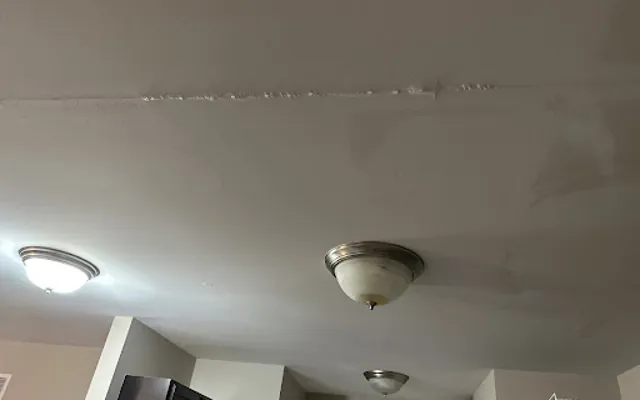
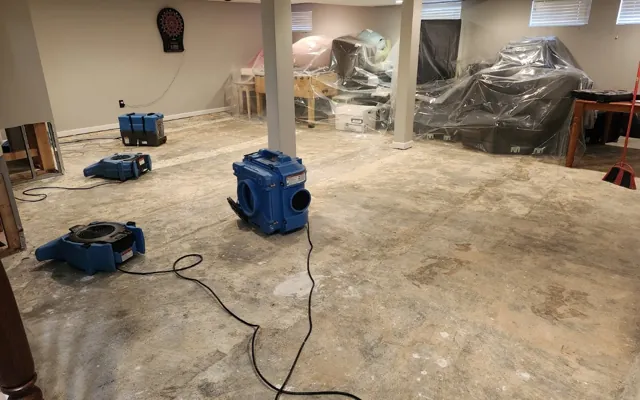
For Method, NC homeowners, quick response to ceiling water damage prevents hidden spread. Local crews follow IICRC-standard methods to trace the leak, extract water, and dry the cavity completely.

Technicians in Method use moisture meters to follow water from the ceiling stain back to its source, which is often an aging pipe or drain line above, hidden within the home's structure.
The crew safely relieves pressure from a bulging ceiling and extracts any pooled water from the space above to stop further damage from feeding into the living areas below.
Wet insulation is removed, and air movers and dehumidifiers are placed to dry the joists and cavity to the required IICRC standard, preserving salvageable drywall.

Ceiling water damage in Method typically runs from about $1,200 to $5,000, depending on the source, how much drywall and insulation is soaked, and whether the ceiling can be dried or must be opened and replaced. A small, caught-early stain sits low, while a sagging ceiling fed by a roof leak sits higher. Sudden losses are commonly covered, and crews document the source for the carrier.
In Method, NC, many of the modest mid-century homes have decades-old plumbing lines running through ceilings and walls. A slow leak from a sewer lateral or fixture can go unnoticed for weeks, soaking insulation and drywall before a stain or sag appears in a living room or bedroom. The long-tenured homes in Method often have original sewer laterals and plumbing. These older lines are prone to slow leaks and backups, which can channel water into ceiling cavities, especially in the humid, subtropical climate of the Research Triangle. From Method, crews also cover nearby Morrisville, Apex, West Raleigh, Green Level, Carpenter, Downtown Cary. See every neighborhood and town on the full service area page.
See all areas servedEvery loss is photographed, measured, and logged from the first visit, so the paperwork holds up with your insurance carrier.
Technicians follow recognized IICRC drying standards and prove the work with daily moisture readings, not guesswork.
Emergency dispatch any hour of the day or night, with a real crew on the way, not a callback in the morning.
A real crew dispatched any hour, not a callback in the morning.
Trained technicians following recognized IICRC drying standards.
Truck-mounted, portable, and submersible for any size loss.
The loss is documented and billed to the carrier directly.
Sudden, accidental water damage, like from a burst pipe or a failed appliance line, is commonly covered. Local crews document the source and the extent of the damage thoroughly to support the homeowner's claim with their insurance carrier.
Drying a ceiling cavity typically takes two to four days. The humid climate in the Research Triangle can affect drying times, so crews use industrial dehumidifiers and air movers to reach the dry standard efficiently before repairs can be considered.
Crews are on call 24 hours a day and can be on the way to Method within the hour.
Call (984) 331-5759